Newark Federal White-Collar Crime Lawyer
Experienced Federal White-Collar Crime Attorney in Newark, NJ
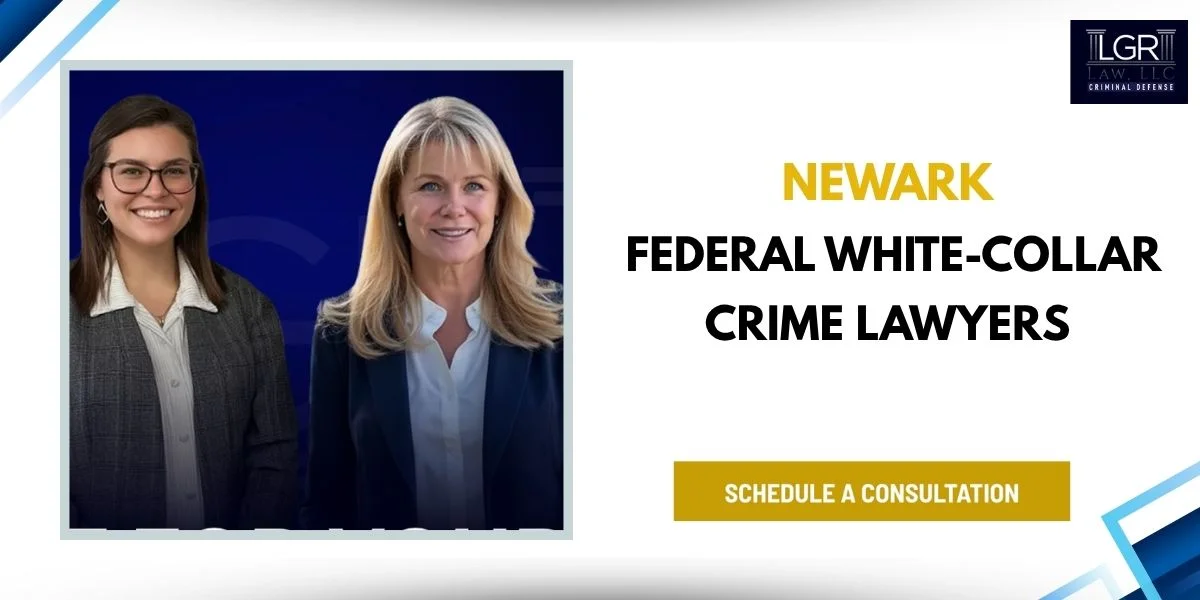
When searching for a Newark federal white-collar crime lawyer, you should first educate yourself about how federal white-collar crime matters are handled. LGR Law, LLC can help you find the answers you need.
Trusted Federal Defense Services in Essex County
LGR Law, LLC is a dedicated federal criminal defense firm serving individuals and businesses throughout New Jersey and New York City. Our founding attorney, Ms. Gauli-Rufo, has over 30 years of federal defense experience, and her history of achieving below-guidelines sentences, dismissals, and acquittals for her clients is unmatched. Her skill and exceptional dedication have earned her an Avvo rating of 10.0.*
Guided by Ms. Gauli-Rufo’s wealth of experience, we take the utmost care to review the evidence, relevant federal laws, and the circumstances of every case. This allows us to make informed decisions based on the facts, not speculation.
*Past results do not guarantee a similar outcome. Every case is different and must be evaluated on its own merits. Awards and recognition are not guarantees of future results. Selection criteria vary by organization.
Understanding Federal White-Collar Crimes
White-collar offenses generally involve allegations of financial misdeeds rather than violence. They are often prosecuted as felonies, which can carry prison time and other heavy penalties. Examples of federal white-collar crimes include:
- Embezzlement, i.e., stealing property when you have been entrusted with its care.
- Fraud, i.e., seeking financial gain through deception. There are many specific federal fraud charges, such as credit card fraud and wire fraud.
- Money laundering, i.e., a financial scheme that hides the origin of money gained illegally.
- Insider trading, i.e., the selling or buying of stocks, options, or other securities based on non-public information about a company.
- Cybercrime, such as phishing, which involves scamming internet service users out of their personal information.
According to the FBI, there were 191,561 complaints of phishing/spoofing and 18,774 complaints of credit card/check fraud across the United States in 2025.
White-collar charges exist in both state and federal criminal codes. White-collar crimes can be charged at the federal level for various reasons, such as if they involve:
- Federally insured or chartered banks
- Communications or other activities that cross state lines
- Federal programs
- Federal law violations
White-collar crime may be of concern in Newark, given the concentration of commercial activity in the city and the major shipping hub at Port Newark-Elizabeth Marine Terminal. Federal prosecutions in Newark generally take place at the United States District Court for the District of New Jersey, located at the Martin Luther King Jr. Federal Building & U.S. Courthouse.
Federal White-Collar Crime Laws
Because “white-collar crime” is such a broad category, there are potentially hundreds of relevant federal statutes that fall under this umbrella.
To name just one example, 18 U.S.C. § 1343, the federal wire fraud statute, makes it a crime to commit, or plan to commit, fraud through foreign or interstate electronic or wire communications, including telephone calls, internet messages, and radio and TV transmissions.
Another commonly invoked law is the federal bank fraud statute, 18 U.S.C. § 1344. This law makes it a crime to intentionally carry out, or attempt to execute, a scheme to defraud or fraudulently obtain funds from a financial institution.
Conviction under these statutes can lead to significant prison time, substantial fines, and mandatory restitution. For more information about federal laws that might apply to your case, consult an experienced federal white-collar crime lawyer.
Why Hire a Federal White-Collar Crime Lawyer in Newark?
Federal criminal cases are often complex and can carry serious penalties. Without support from an attorney who understands both federal criminal law and financial regulations, defending yourself can be difficult.
Your Newark federal white-collar crime attorney can:
- Evaluate the prosecution’s evidence and strategy
- Construct a strong defense
- Submit required legal documents according to court deadlines
- File motions on your behalf
- Try to work out a deal with the prosecutor, if feasible
- Represent you in and out of court
- Explain court procedures and deadlines
- Advise you on potential sentencing consequences
- Seek post-conviction relief through appeals and other remedies, if necessary
Don’t face your federal criminal case alone; rely on an experienced attorney with a proven track record of defending clients with charges like yours.
FAQs
Can Federal White-Collar Crime Charges Affect My New Jersey Professional License in Newark, NJ?
Yes, federal white-collar criminal charges or convictions can result in action against the defendant’s professional license (e.g., a financial advisor license or healthcare license). In many cases, licensing agencies conduct internal investigations of the licensee’s conduct. The licensing agency may choose to suspend or revoke your license depending on its rules and the circumstances.
Can the Government Seize Assets During a Federal Investigation in Newark, NJ?
Federal law enforcement can potentially seize or freeze assets that they suspect were used for, or gained through, criminal activity. This can sometimes occur even before a criminal conviction through a process called civil forfeiture, with federal statutes detailing the processes for disputing the action, recovering, or permanently losing property.
What Happens if I Receive a Federal Grand Jury Subpoena in Newark, NJ?
Getting a grand jury subpoena does not necessarily indicate that you have been accused of a crime. You may be asked to testify or produce documents. As there may be consequences for not responding appropriately, it’s important to review the subpoena, any deadlines, and your obligations before responding.
At LGR Law, LLC, we handle targets of grand jury subpoenas. Please contact us immediately upon receiving a subpoena and prior to taking any action, so we can help guide your response.
What Is Restitution in a Federal White-Collar Crime Case in Newark, NJ?
Restitution is a court order directing a convicted individual to pay victims for certain losses they suffered as a result of the crime. The figure is usually based on provable losses determined during the course of the case. Restitution is different from a criminal fine; you may be held liable to pay it even after serving a term of incarceration.
LGR Law, LLC Has Your Back
If you have been accused of a white-collar crime, LGR Law, LLC can help. We understand how serious these accusations are. When you need to hire a federal white-collar crime lawyer, contact us to learn more about how we can help defend your future.

© Copyright 2026 LGR Law LLC. All rights reserved.
Digital Marketing By 
*Images are obtained under license from Canva and other third-party stock image providers, with attribution included where required.